Get the answers about Canada straight from the sources.
Articles
Making sense of the data and putting into context.
In 2023, Statistics Canada reported that 5.3 million Canadians—about 3 in 10 employees—were covered by collective bargaining agreements. Of which 76.7% of public sector employees were unionized compared to 15.5% of employees in the private sector.
In 2023, the agriculture sector in Canada employed 280,798 people, of which 79,734 or 28% were temporary foreign workers. This represents an increase of 15,085 people from the year before.
The Labour Force Survey provides insights into shifting national, provincial, territorial, and regional labour trends such as employment across industrial sectors, hours worked, labour force participation, and unemployment rates.
Across Canada, healthcare spending varies by province and territory. Learn which region of Canada spends the most per capita on healthcare.
Discover what lands Canadians in the hospital most often. In 2023–2024, the top causes were childbirth, COPD/bronchitis, heart failure, pneumonia, and knee osteoarthritis.
Canada’s health care costs reached $336 billion in 2022, averaging $8,645 per person. See how spending has shifted since 1975 and what public funds cover.
Who lives the longest in Canada? In 2023, the longest life expectancies are in Quebec, Ontario, BC, while Manitoba, Newfoundland & Labrador, and Saskatchewan rank lowest.
Did you know?
The most recent federal election (2025) is estimated to have cost $570 million or $17.79 per registered voter.
Get the dataChart of the week
Bite-sized insights on how Canada is changing, published every Friday.
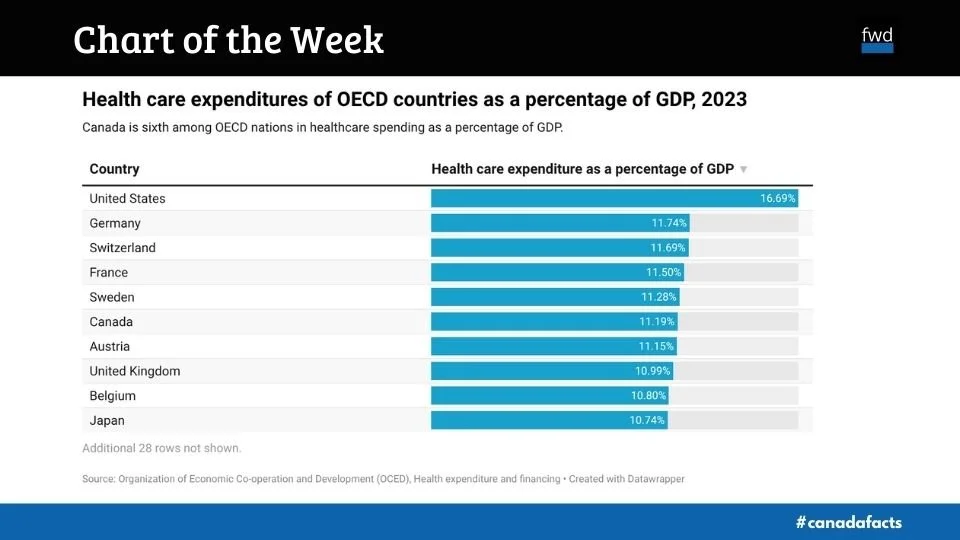
How and what countries spend money on provides insight into their priorities. In 2023, total health care spending in Canada represented 11.18% of its GDP, placing it sixth overall among OECD countries in overall health care spending as a percentage of GDP and puts it in a group of higher health care spending countries alongside France, Sweden, and the United Kingdom. See where other countries rank.
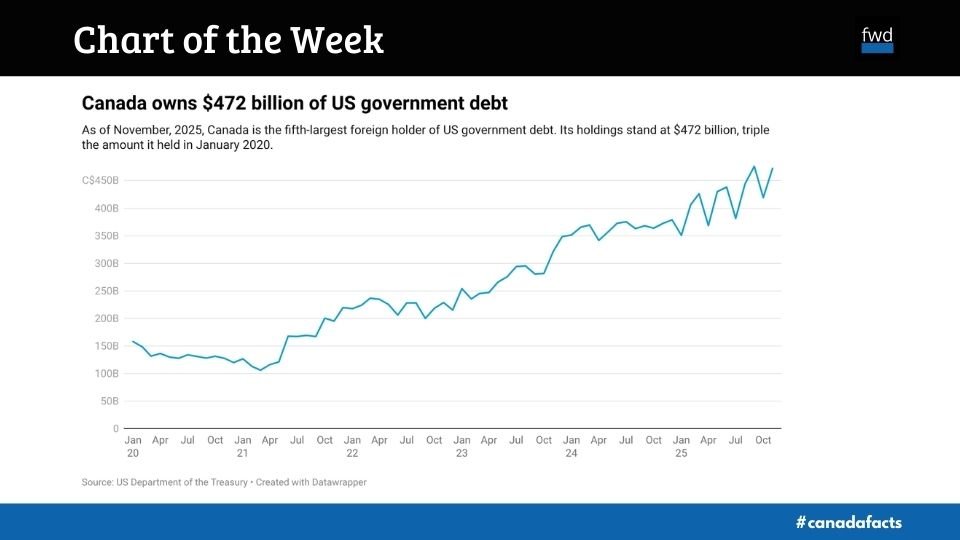
The US national debt stands at $37.64 trillion, about a quarter of which is owned by foreign countries through US Treasury Securities such as T-bills, T-notes, and Treasury bonds. As of November 2025, Canada is the fifth-largest foreign owner of US debt. See how Canada’s ownership of US debt has changed since 2020.
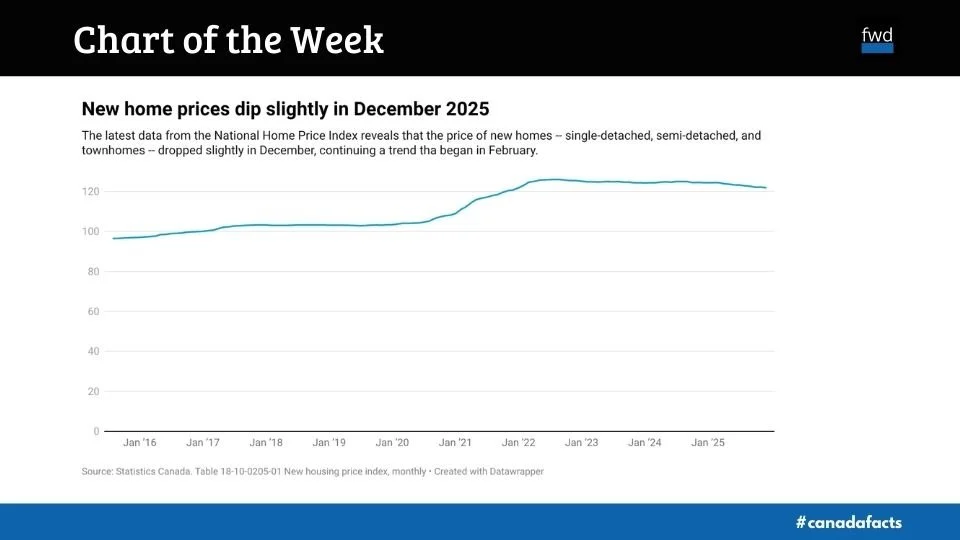
New home prices in Canada were down in December, continuing a downward trend that began at the beginning of the year. New home prices experienced monthly declines in 8 of the 12 months in 2025.
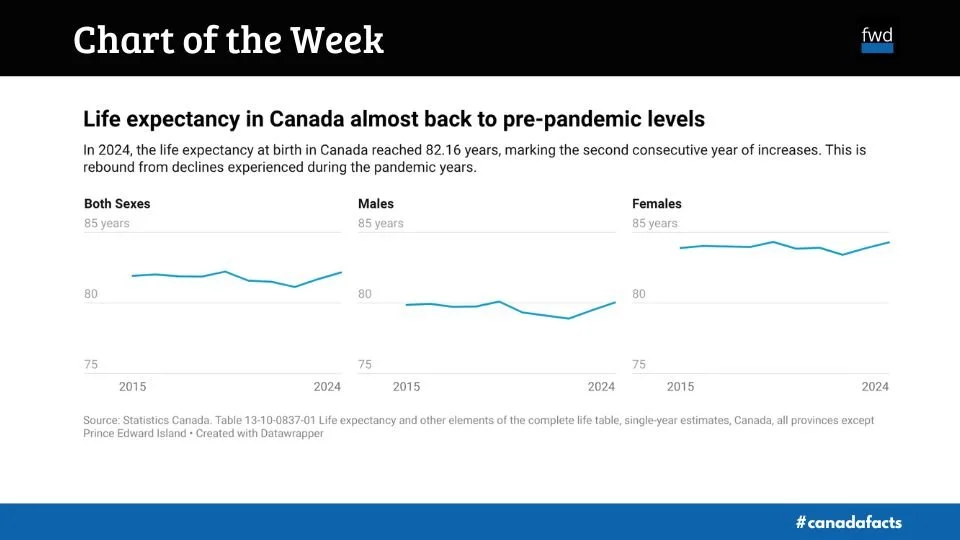
In 2024, life expectancy in Canada climbed for the second consecutive year, reaching 82.16 years, just shy of levels recorded before the global pandemic.
Registered Retirement Saving Plans or RRSPs are an important part of the retirements savings equation for many Canadians. These plans provide additional funds upon retirement, giving people an added level of financial security. Learn how many Canadians invest in RRSPs.