Making sense of public data
No opinions, just straight facts. We sift through reams of public data from Statistics Canada, the World Bank, the United Nations, OECD, and more to explain the trends that matter.
40+
datasets
50+
articles
20+
sources
READ INSIGHTS
What the data reveals
CANADA
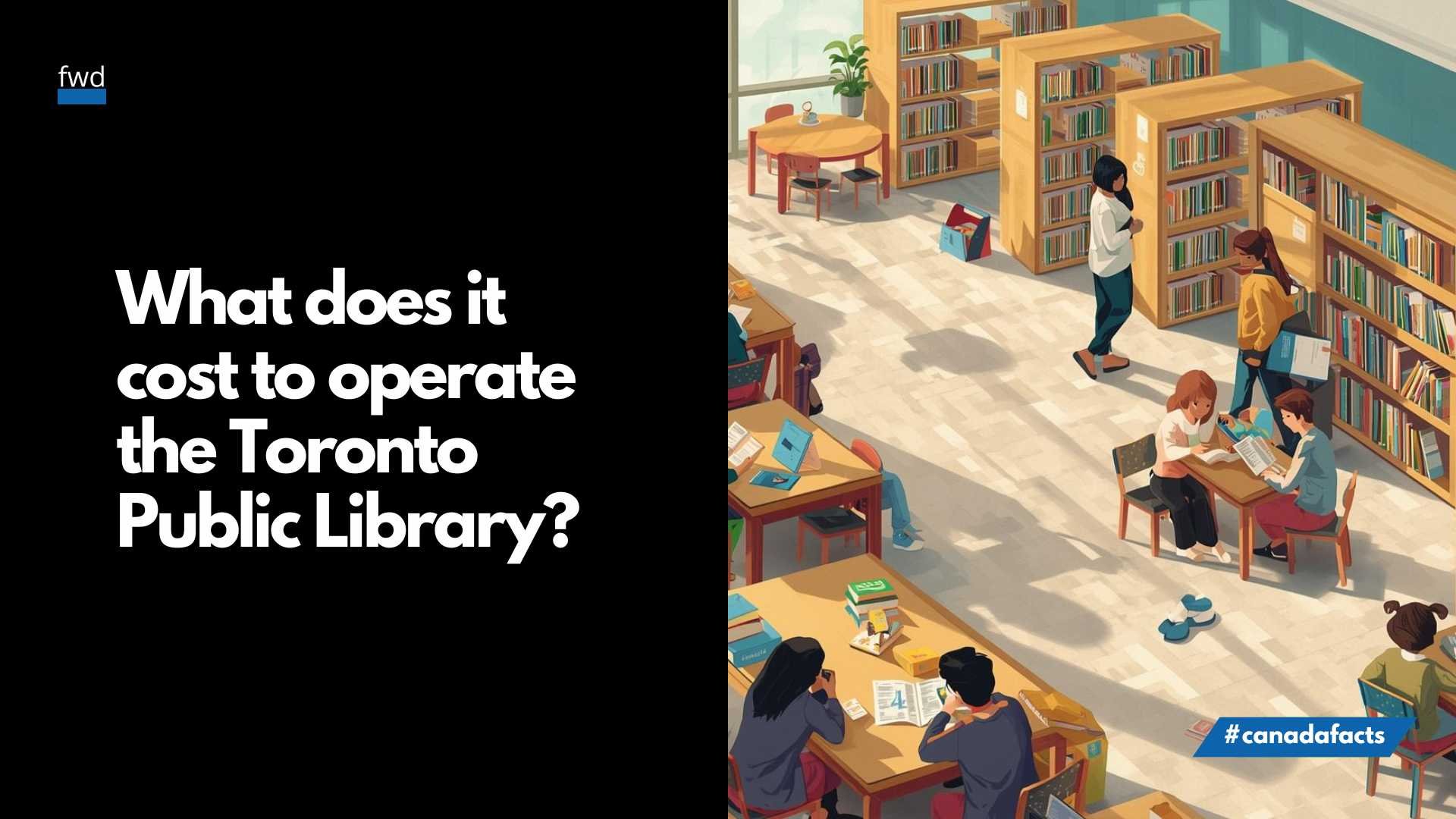
The Toronto Public Library (TPL) is more than a network of book-lending branches—it is one of the city’s most heavily used public services and a cornerstone of civic life. Learn about its funding and expenses, the scale of its branch network, and patterns of use across locations.
In 2024-2025, Ontario’s Ministry of Colleges and Universities committed $148.5 million in research funding, $90 million less than the previous year. From 2019-2020 to 2024-2025, over $772 billion was committed to early- and advanced-stage projects.
Curious about how many Canadians vote? Since 1867, the average turnout is around 70.4%. Peaks hit 79.4% in 1958 and dipped to a low of 58.8% in 2008.
Following a general election, there are generally two outcomes: the formation of a majority or minority government. We break down what they are and how they function.
How is the United Nations funded?
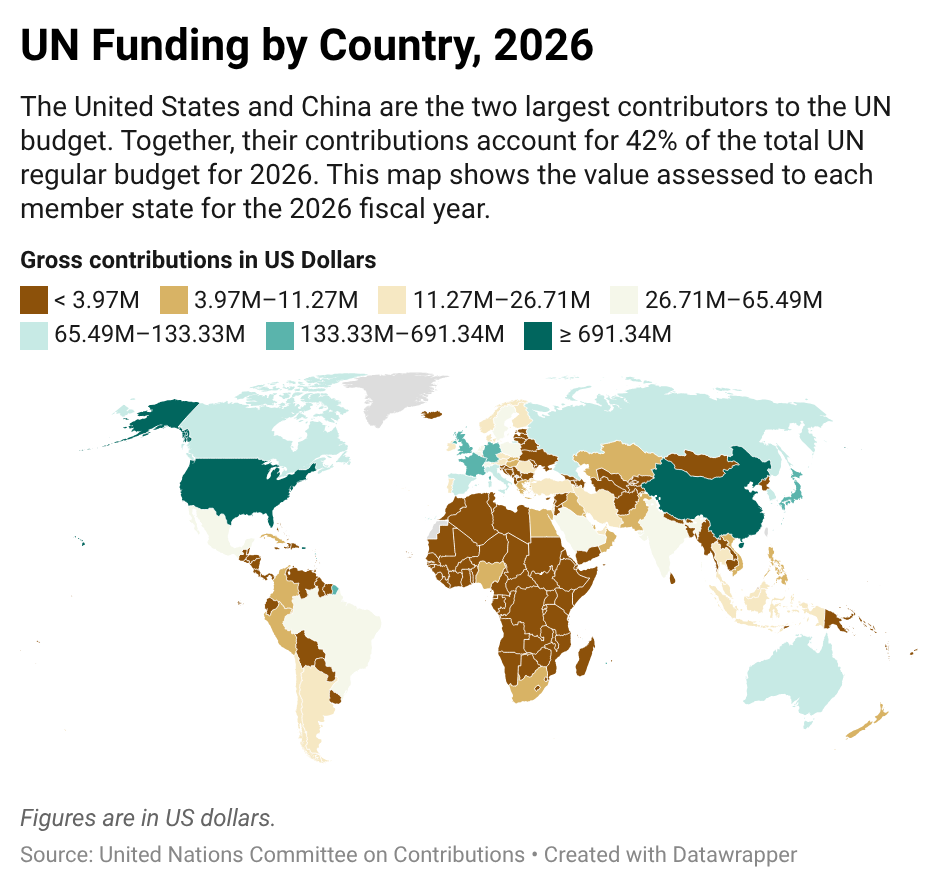
On December 31, 2025, the UN General Assembly approved a regular budget of $3.45 billion for 2026. All members of the UN are required to contribute, but the amount varies. Learn who contributes the most and what happens when members fail to meet their financial obligations.
INTERNATIONAL

The U.S. imported 22.9 million metric tons of steel in 2025, with Canada as its largest supplier. Explore U.S. steel import trends, top trading partners and the types of steel products imported.
Rising global temperatures are driving growing demand for air conditioning as people seek relief from increasingly frequent and intense heat. Global AC shipments reached a record 200 million units in 2024, while China saw the share of households with air conditioning rise from 53% in 2015 to 79% in 2025.
In 2024, the United States imported 8.4 million barrels of oil per day. About 4.6 million barrels of oil per day came from Canada, making it to top supplier by a wide margin. See where other countries rank.
As of November 2025, U.S. government debt reached $36.2 trillion, with foreign investors holding $9.35 trillion—about 26%—through U.S. Treasury securities. Learn which country holds the most US debt.
The internet has changed the way the world works, learns, and forms connections. In 2023, about 7 in 10 people globally had access to the internet via a computer, mobile phone, games machine, streaming services, etc. Learn about how access and usage trends have changed between 2015 and 2023.
Putting data about Canada into context
CANADA FACTS
ECONOMY
Servicing debt takes away much-needed funds that otherwise could be used to support programs and projects. Learn which provinces and territories have the most debt.
In 2024-2025, the Government of Ontario collected $226.2 billion in revenue. That’s more than a $20 billion or a 10% increase from the previous year. The largest source of revenue is personal income tax which reached $55.7 billion.
In the 2024-2025 fiscal year, the Government of Alberta collected $82.5 billion in revenues, up approximately 10.3% from $74.7 billion in the previous fiscal year.
Across the country, the rising cost of living is straining Canadian bank accounts. For many, meeting their debt obligations, including mortgage payments, is becoming challenging. Learn what mortgage delinquency rate nationally, and how it compares from region to region.
Toronto ranks eighth overall among all governments in Canada by budget size, ahead of many provinces and territories, and all other municipalities. Learn how much the city collects and where it spends its money.
Since 2016, Canada has been ramping up construction of key infrastructure to support Canadians switching from gas-powered vehicles to zero-emission vehicles, including electric charging stations. Dive into the data to explore how many electric charging stations there are across the country and which provinces have the most robust system.
Ontario has an extensive public transit system, serviced by 106 municipal transit authorities and two provincial transit authorities, funded by revenues from fares and subsidies from municipal, provincial, and federal governments.
How is Ontario’s public transit system funded?

How many Canadians have Registered Retirement Savings Plans?
Many Canadians rely on additional sources of income, such as Registered Retirement Savings Plans or RRSPs, to fund their retirement. Learn how many Canadians have RRSPs.
POPULATION

Canadian students rank among the top performers globally in science, mathematics, and reading, according to the results from the 2025 edition of PISA. However, their scores were the lowest recorded since the international assessment began in 2000. Learn more about Canada’s performance.
In 2024, the TTC recorded more than 419 million passenger trips. For many Toronto residents, it’s their primary mode of transportation getting them to and from neighbourhoods throughout the city. Explore what it costs to operate such a large public transit network.
Ontario has an extensive public transit system, serviced by 106 municipal transit authorities and two provincial transit authorities, funded by revenues from fares and subsidies from municipal, provincial, and federal governments.
Canada is a diverse country, and this is reflected in the number of different languages spoken by Canadians. In 2021, 3 in 10 Canadians reported being able to speak another language other than English or French.
Discover Canada's fastest-growing cities (2015–2024) — from West St. Paul’s 77% surge to top gains in Ontario, Quebec & BC. Explore trends and insights.
How fast are Canadian provinces aging? Track changes from 1971 to 2024—and discover why Atlantic Canada surged while Alberta stayed young.
HEALTH
Across Canada, healthcare spending varies by province and territory. Learn which region of Canada spends the most per capita on healthcare.
Discover what lands Canadians in the hospital most often. In 2023–2024, the top causes were childbirth, COPD/bronchitis, heart failure, pneumonia, and knee osteoarthritis.
Canada’s health care costs reached $336 billion in 2022, averaging $8,645 per person. See how spending has shifted since 1975 and what public funds cover.
Who lives the longest in Canada? In 2023, the longest life expectancies are in Quebec, Ontario, BC, while Manitoba, Newfoundland & Labrador, and Saskatchewan rank lowest.
ENVIRONMENT
Canada's wildland fires can affect communities, wildlife and air quality far beyond where they begin. Wildfire trends, causes and burned areas reveal that while humans start more fires, naturally caused fires account for most of the land burned.
Ontario is the only province or territory in Canada with Conservation Authorities. There are 36 across the province — 31 in southern Ontario with 5 in northern Ontario responsible for protecting land and water from natural hazards such as flooding, drought, erosion, and deforestation.
Canada is a global mining powerhouse, boasting abundant reserves of the critical minerals that underpin tomorrow’s technology. It has active mines, smelters, refineries, and a robust pipeline of advanced‑stage projects in every province and territory except Prince Edward Island.
CHART OF THE WEEK
Bite-sized insights, published every Friday
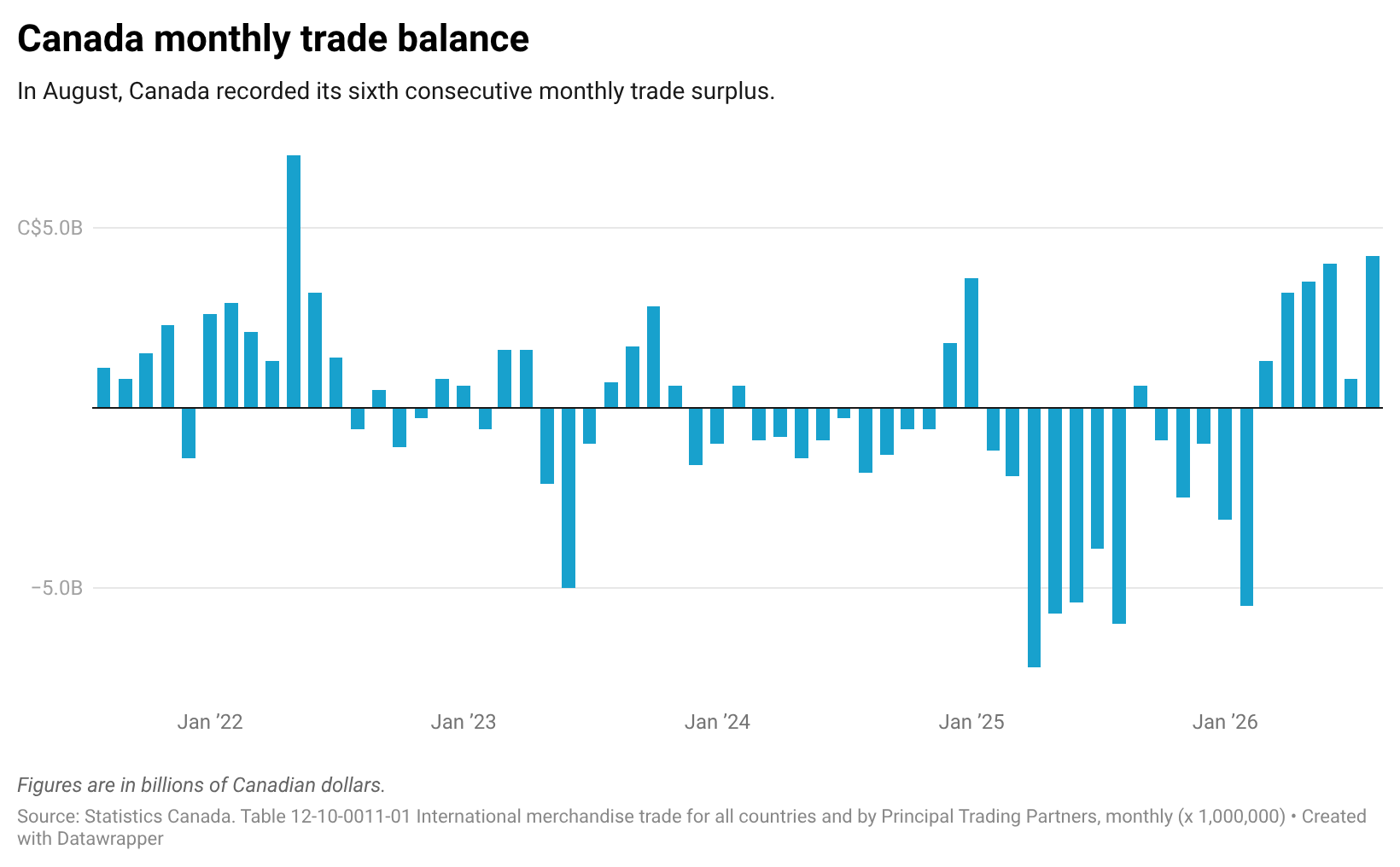
The average cost of milk in Canada inches upward
The average price of 2 litres of milk across Canada in February 2026, was $5.47, up $0.06 from the month before, and $0.13 more expensive than the same period from a year ago. Explore how the price of milk has changed across provinces.
TRENDLINES
Exploring topics shaping the world

The U.S. imported 22.9 million metric tons of steel in 2025, with Canada as its largest supplier. Explore U.S. steel import trends, top trading partners and the types of steel products imported.
Rising global temperatures are driving growing demand for air conditioning as people seek relief from increasingly frequent and intense heat. Global AC shipments reached a record 200 million units in 2024, while China saw the share of households with air conditioning rise from 53% in 2015 to 79% in 2025.
In 2024, the United States imported 8.4 million barrels of oil per day. About 4.6 million barrels of oil per day came from Canada, making it to top supplier by a wide margin. See where other countries rank.
As of November 2025, U.S. government debt reached $36.2 trillion, with foreign investors holding $9.35 trillion—about 26%—through U.S. Treasury securities. Learn which country holds the most US debt.
Data from the 2025 PISA reveals that student performance in science, reading and mathematics across OECD countries continues to decline, with reading and mathematics reaching the lowest average ever recorded.
The United States had a population of 341.8 million in 2025, making it the world’s third-most populous country. California was the most populous state with 39.4 million residents, while Wyoming had the smallest population at 588,753.
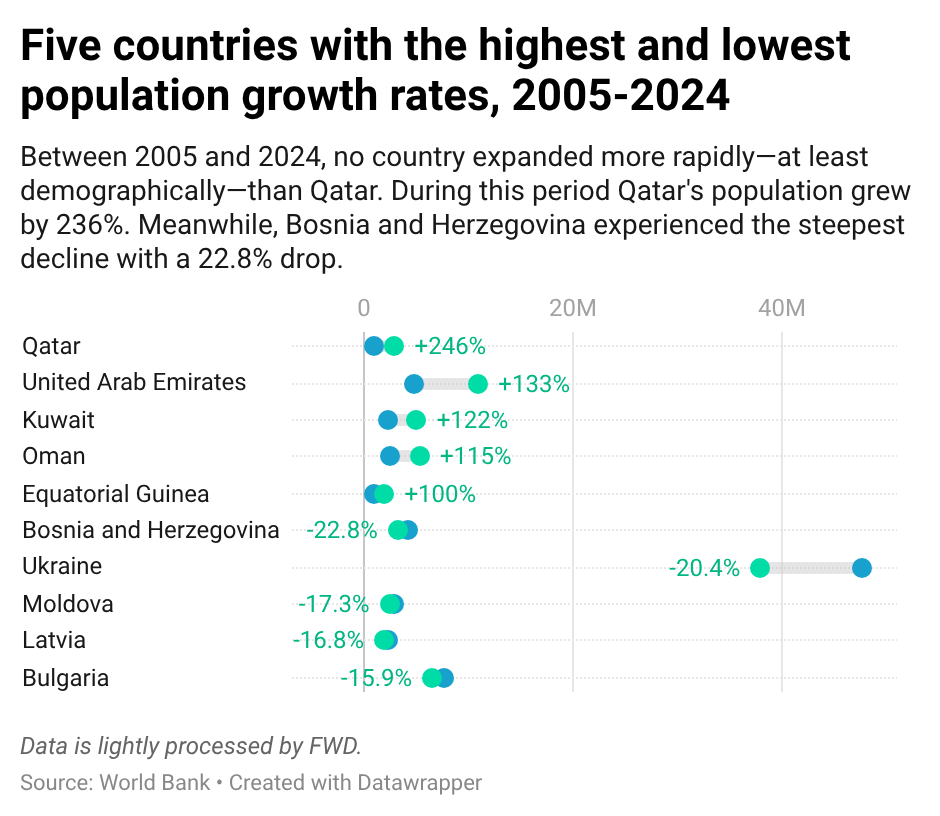
India and China are the world’s most populous countries, together accounting for more than 3 in 10 people globally. The world’s top 10 most populous countries are home to 57% of the global population.
The median household income in the United States in 2024 was $81,604. Learn how it compares across household types.
Ontario’s municipal elections have a major impact on everyday life, yet voter turnout remains significantly lower than in federal and provincial elections. See how turnout in municipal elections compares with federal and provincial elections, and which cities had the highest turnout during the 2022 elections.